
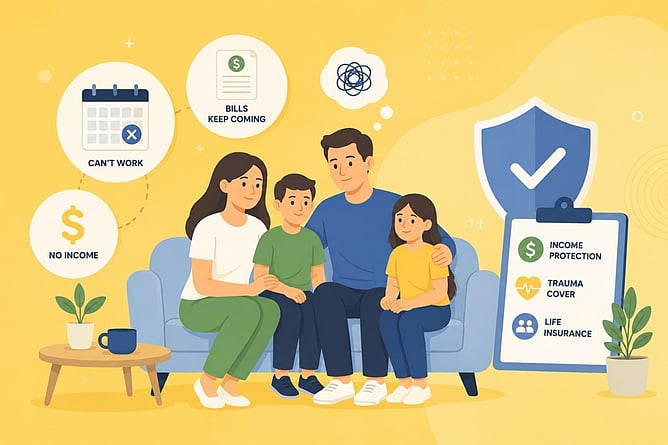
Many people insure their home, car, and belongings, but often overlook one of their biggest financial assets:
Their ability to earn an income.
The reality is this:
If you were unable to work for six months or more due to illness or injury, the financial pressure can build very quickly.
The Bills Don’t Stop
Even a short period away from work can create significant stress financially.
For many New Zealanders, ongoing expenses still include:
Mortgage or rent payments
Power and internet
Groceries
Fuel and transport
School or childcare costs
Credit cards and personal debt
Everyday living expenses
While some people may have savings available, extended time off work can often use those funds much faster than expected.
It’s Not Always About Serious Injury
A common misconception is that being unable to work only happens after a major accident.
In reality, time away from work is often caused by:
Illness
Surgery and recovery
Mental health challenges
Cancer treatment
Chronic conditions
Unexpected medical events
Many of these situations can impact your ability to work for weeks — sometimes months — while still requiring ongoing financial commitments.
Understanding ACC in New Zealand
Another common misunderstanding is assuming ACC will fully protect you financially.
ACC can provide valuable support for accidents and injuries, however:
ACC generally does not cover illnesses
Conditions such as cancer, heart attacks, strokes, or other medical conditions typically fall outside ACC support
Recovery periods can still create major financial pressure
This is often where personal insurance can play an important role alongside ACC.
How Insurance Can Help
Different types of cover are designed to support different situations.
Income Protection
Income protection can provide ongoing monthly payments if you are unable to work due to illness or injury.
This can help contribute toward:
Mortgage or rent
Household expenses
Debt repayments
Maintaining your lifestyle during recovery
Trauma Cover
Trauma cover provides a lump sum payment if you are diagnosed with a specified serious medical condition.
This can help provide flexibility during recovery and reduce financial stress when you may need it most.
Life Insurance
While life insurance is often associated with protecting family financially after death, it can also form part of a broader protection plan to help provide long-term security.
Why Planning Ahead Matters
The best time to review your insurance is generally before you need to claim on it.
Having the right structure in place can help provide:
Financial stability
More flexibility during recovery
Reduced stress during difficult periods
Greater confidence around your family’s future
Insurance is not about expecting the worst to happen — it’s about creating a plan so that if life changes unexpectedly, you have options available.
Our Approach
At NZ Advice Group, we focus on helping clients understand:
What cover they currently have
Where potential gaps may exist
How different covers work together
What is appropriate for their personal situation and budget
Every situation is different, which is why personalised advice can make a significant difference.
Next Steps
If you haven’t reviewed your insurance recently, now may be a good time to reassess whether your current cover still aligns with your lifestyle and financial commitments.
A review is:
Straightforward
Obligation-free
Designed to give you clarity around your current position
If you would like to discuss your current cover or better understand your options, our team is here to help.